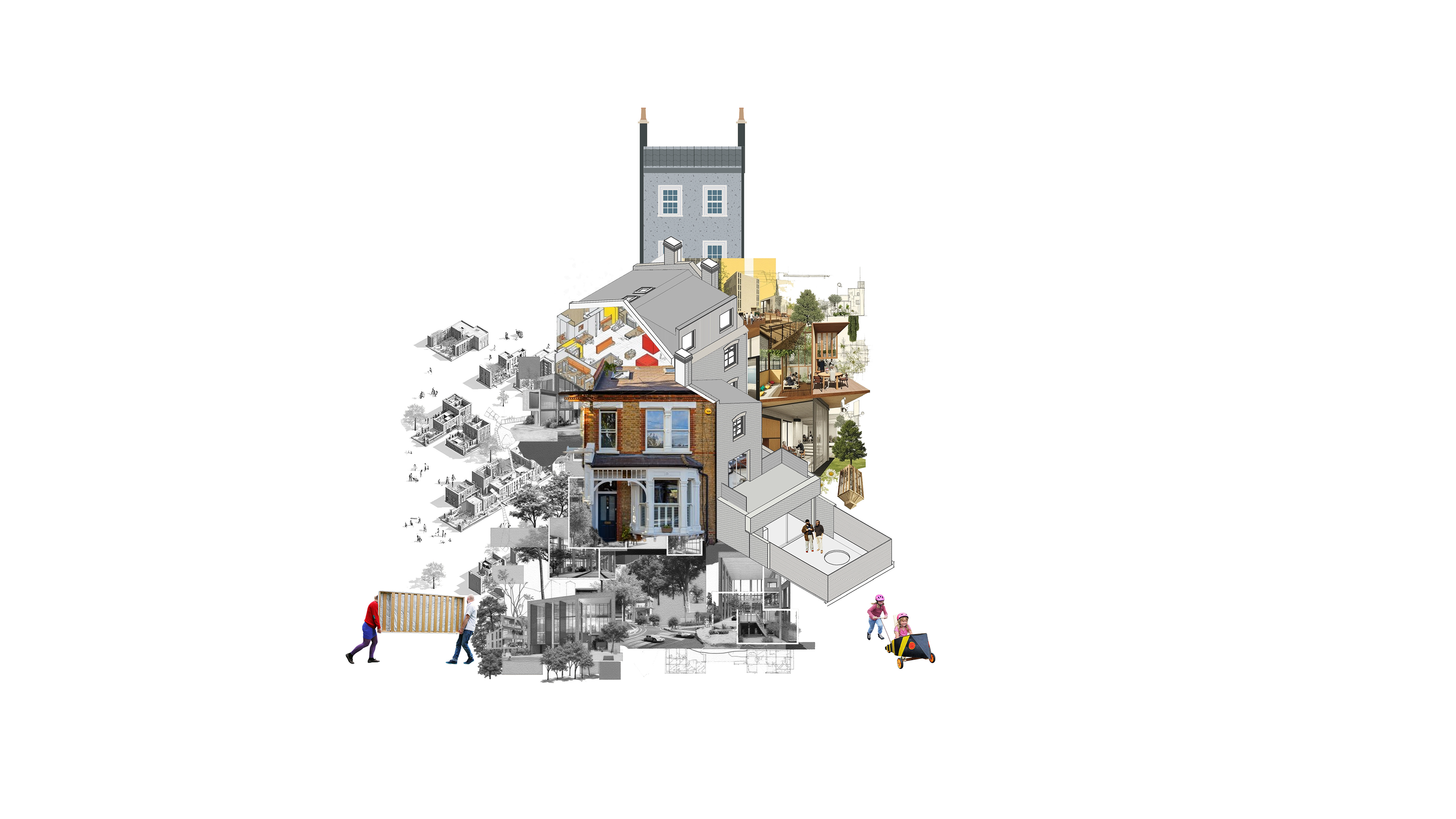
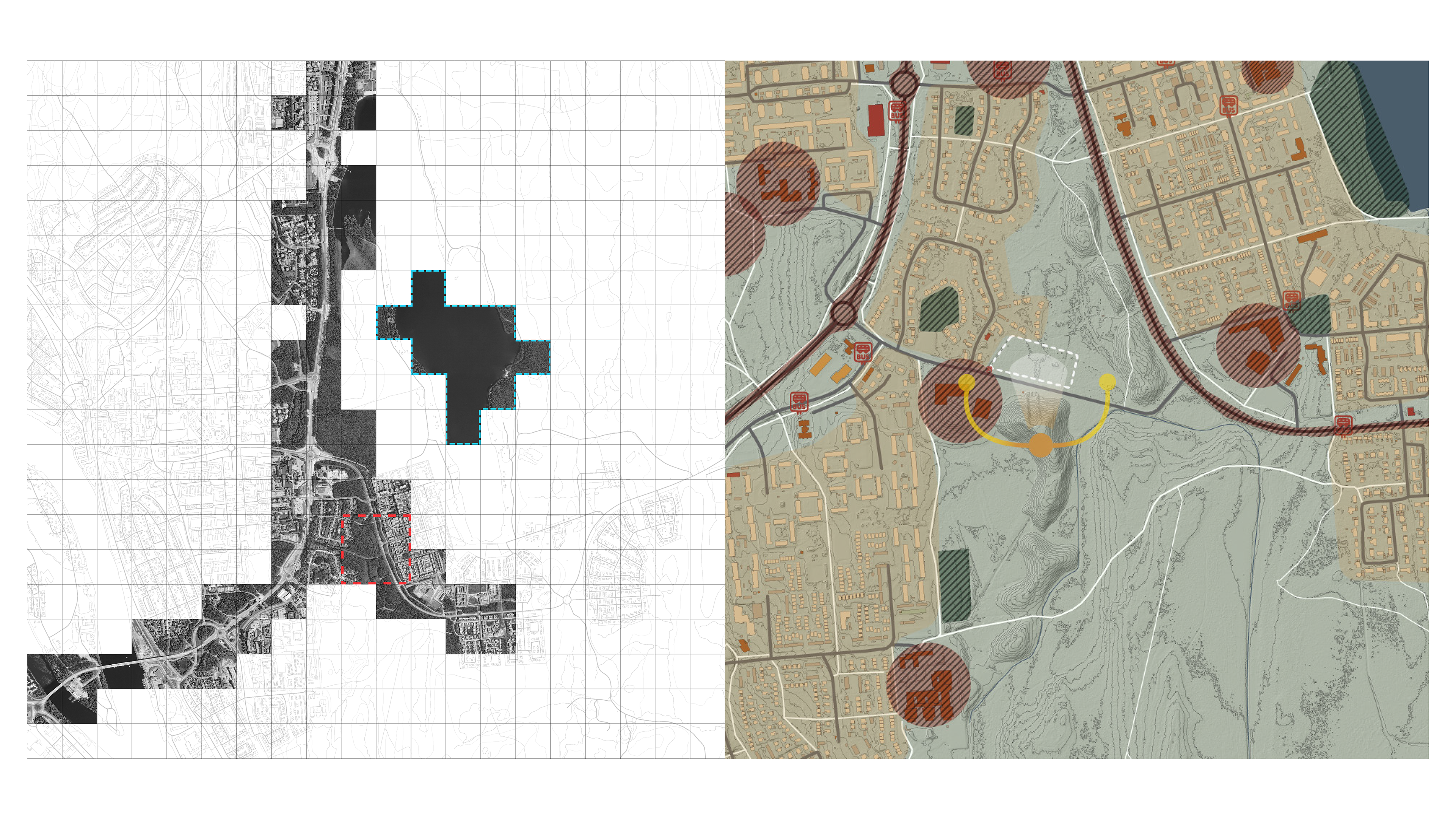
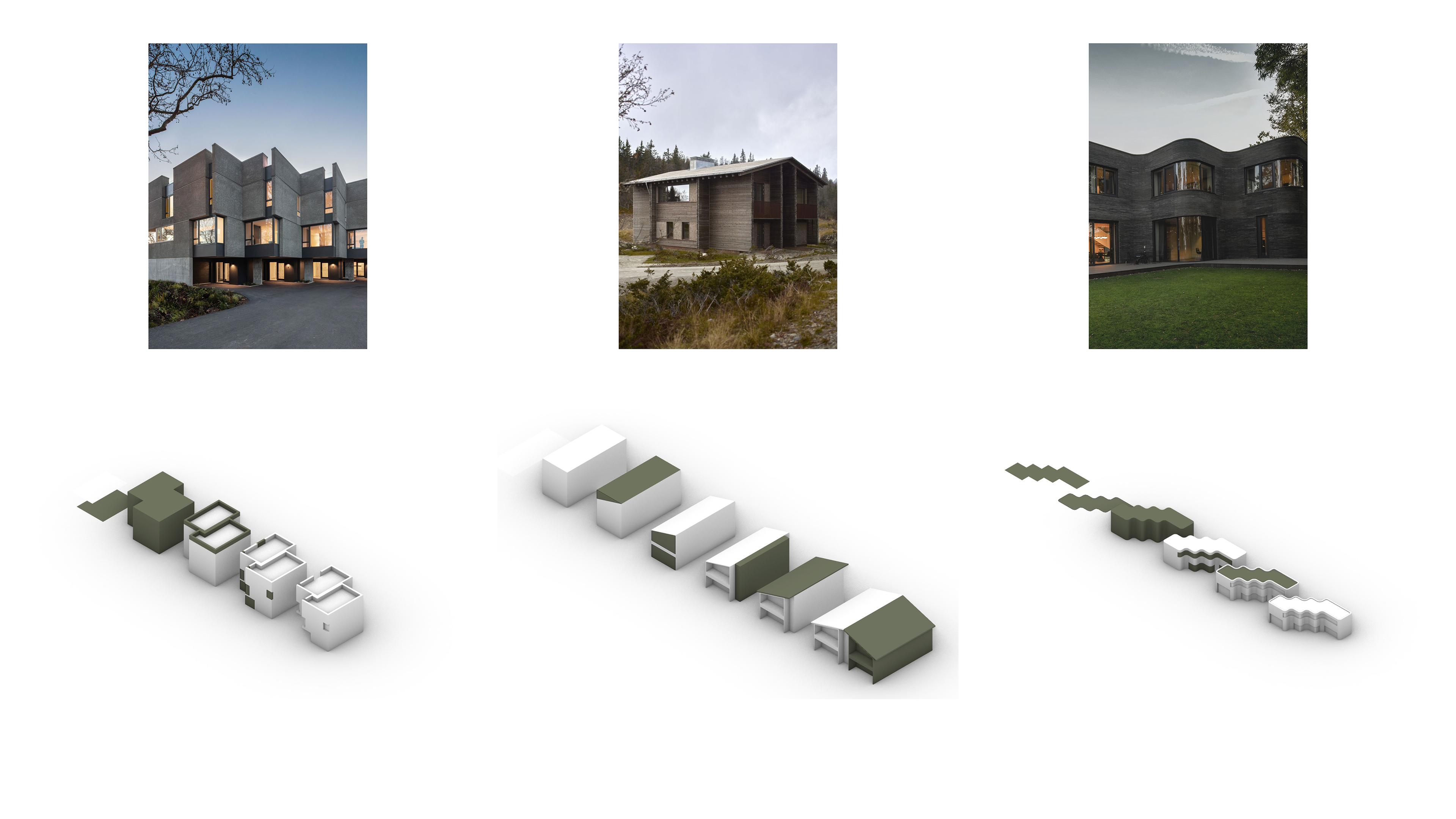
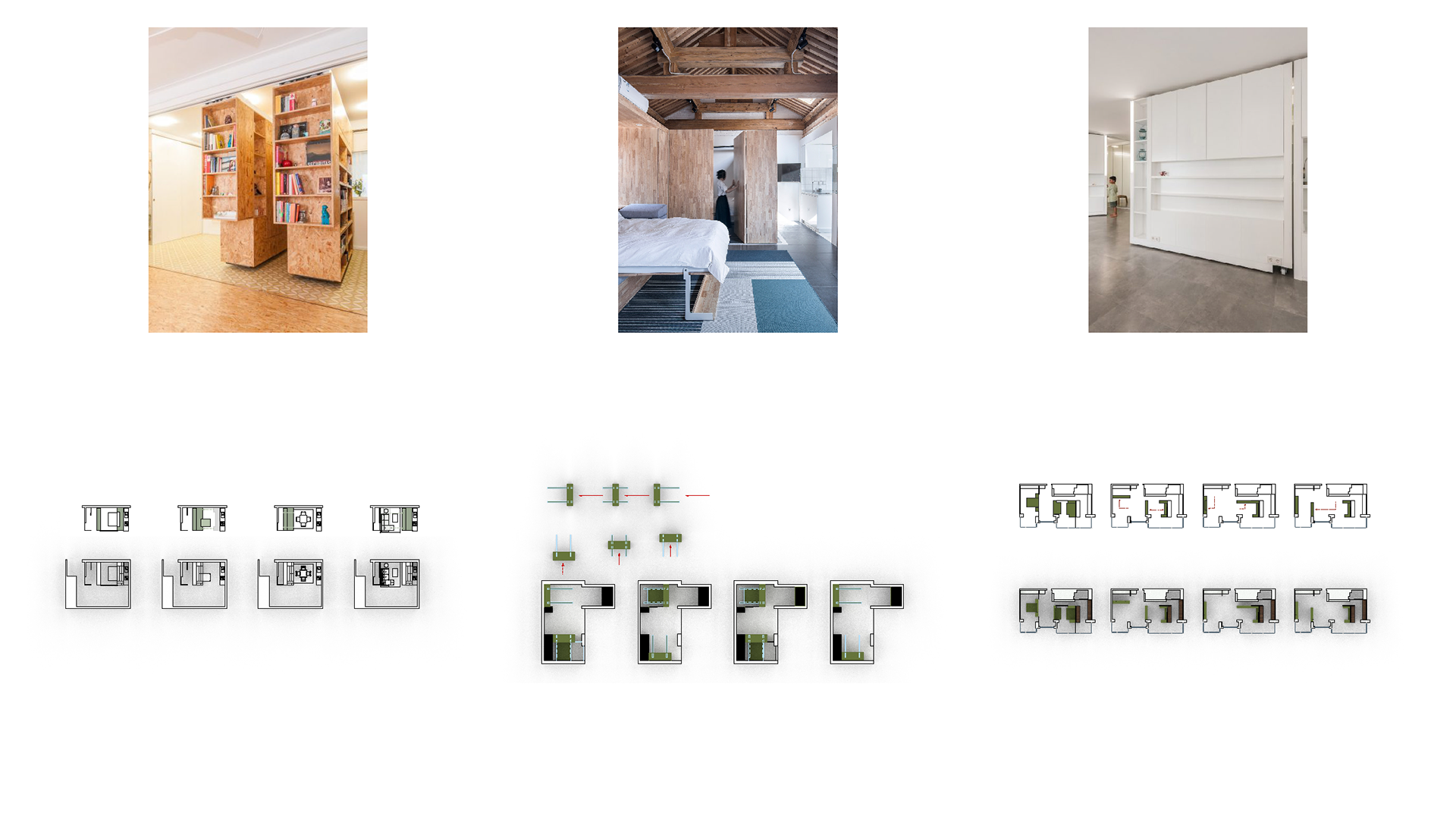
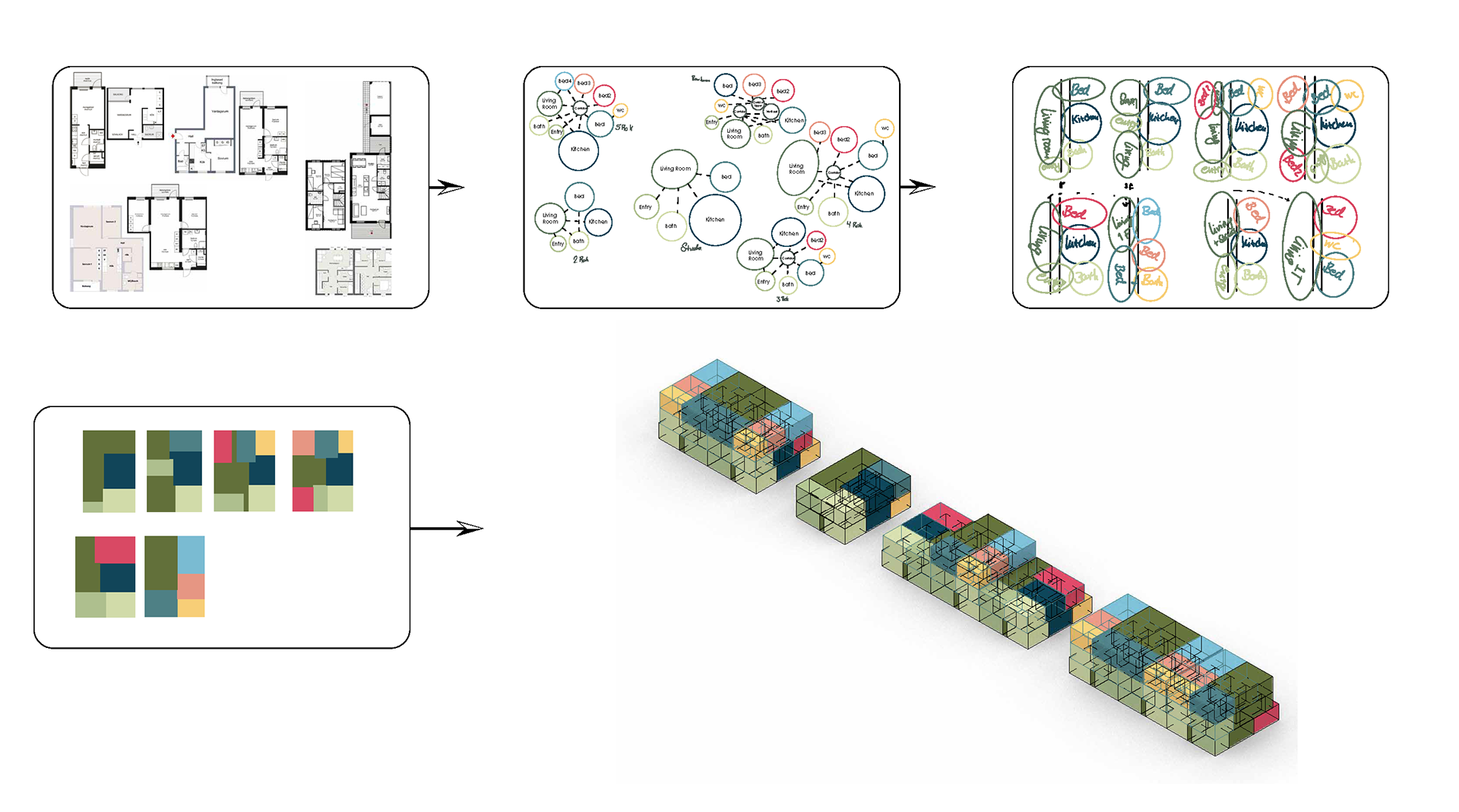
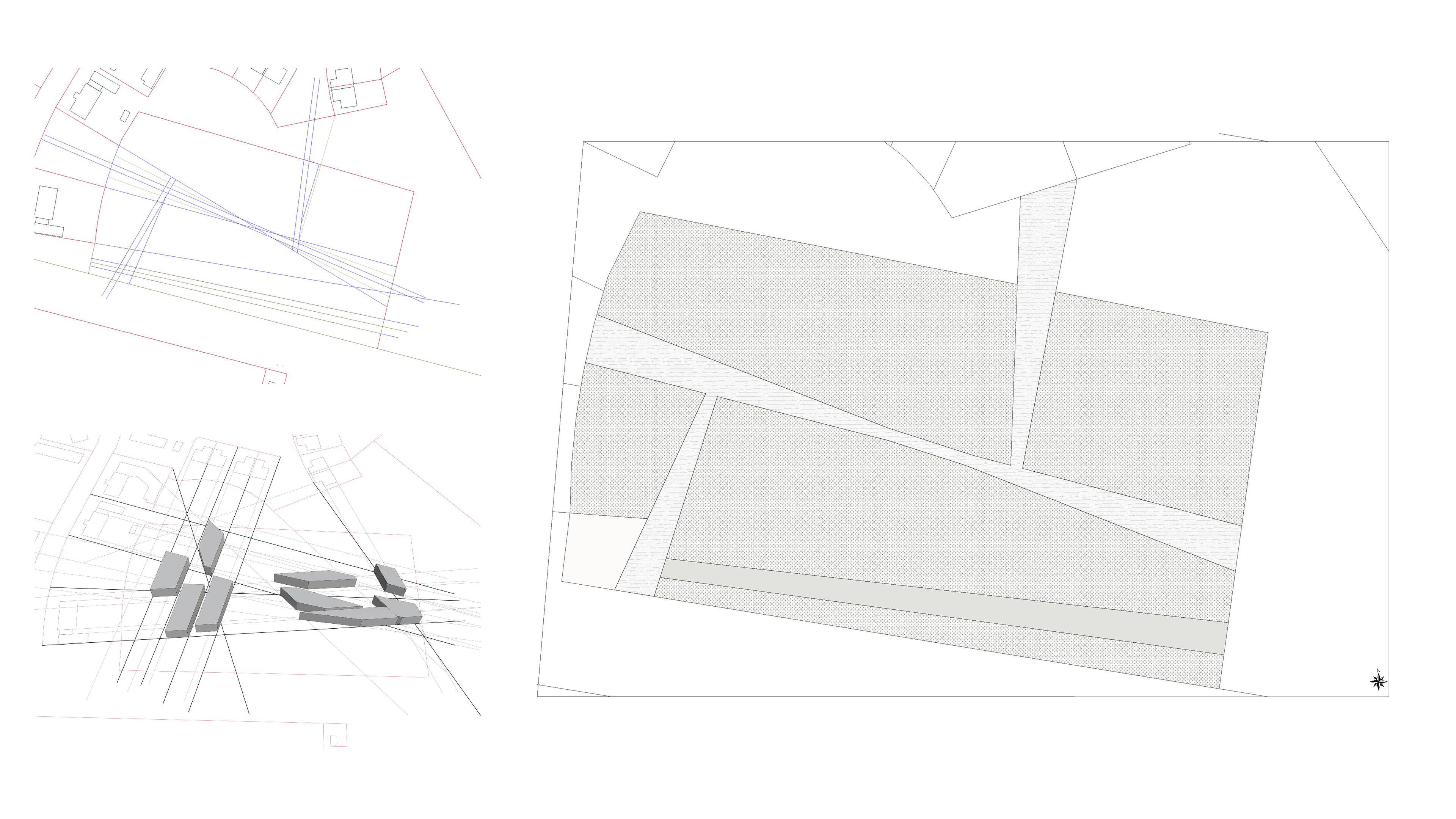
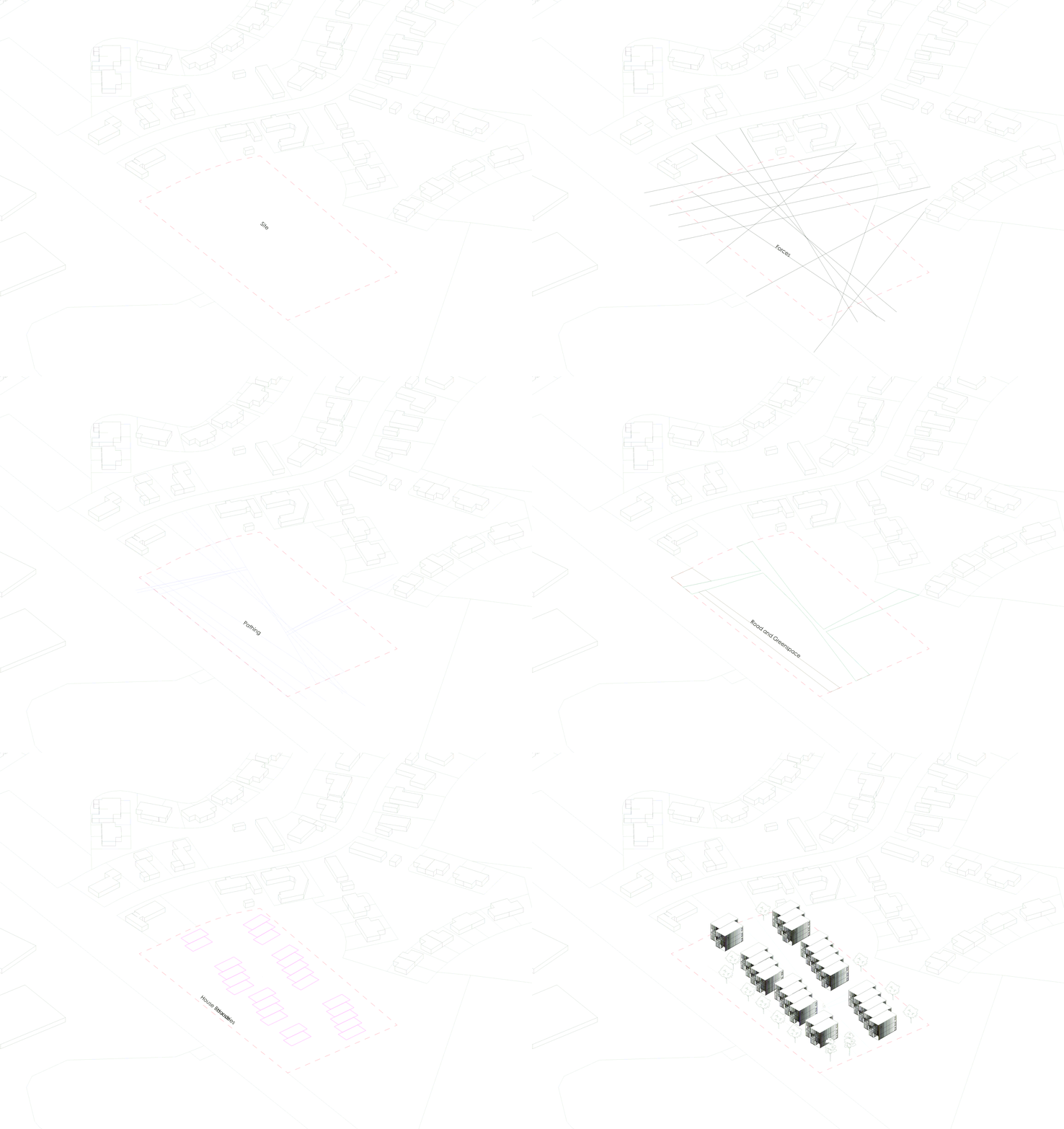
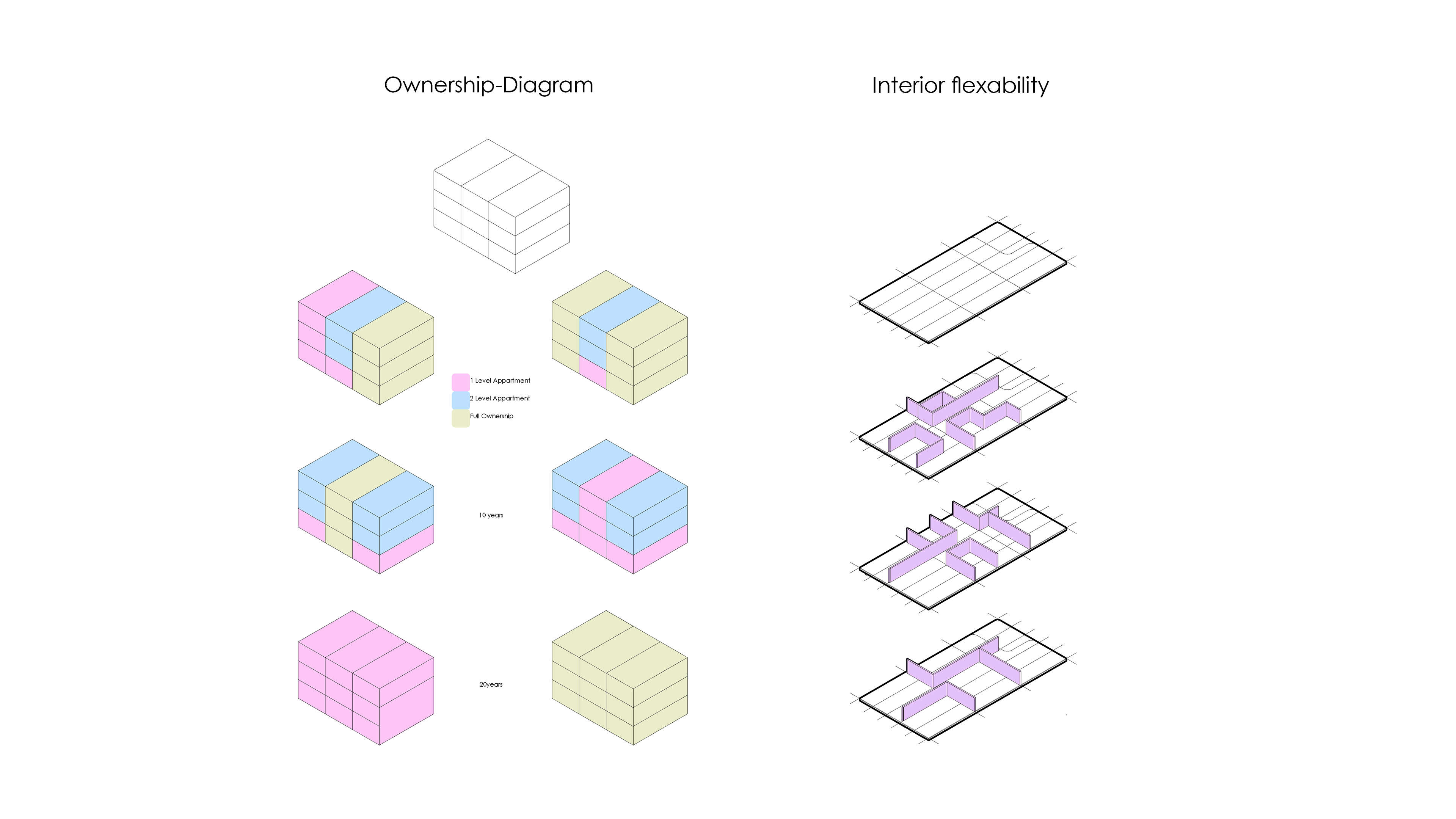
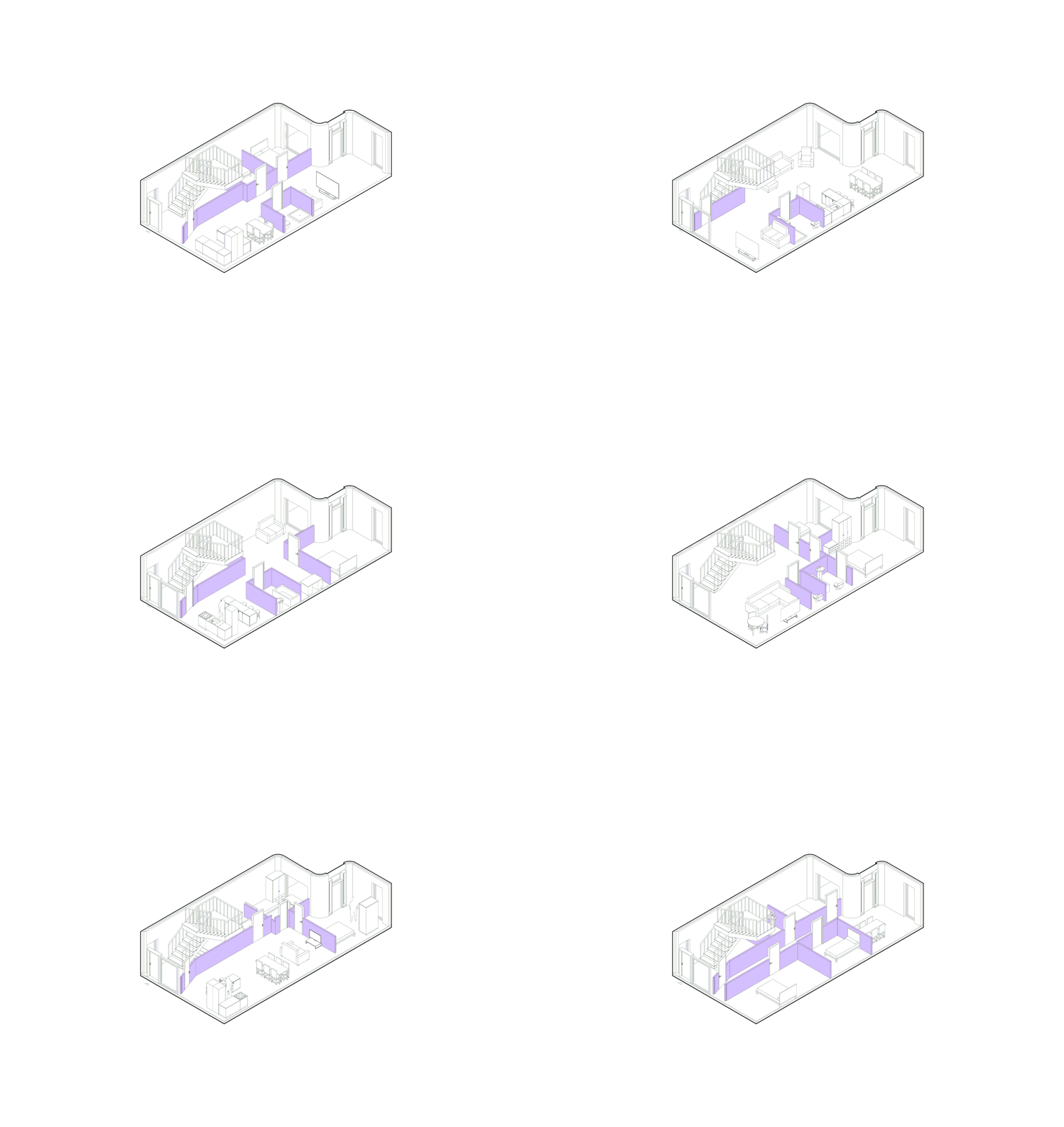
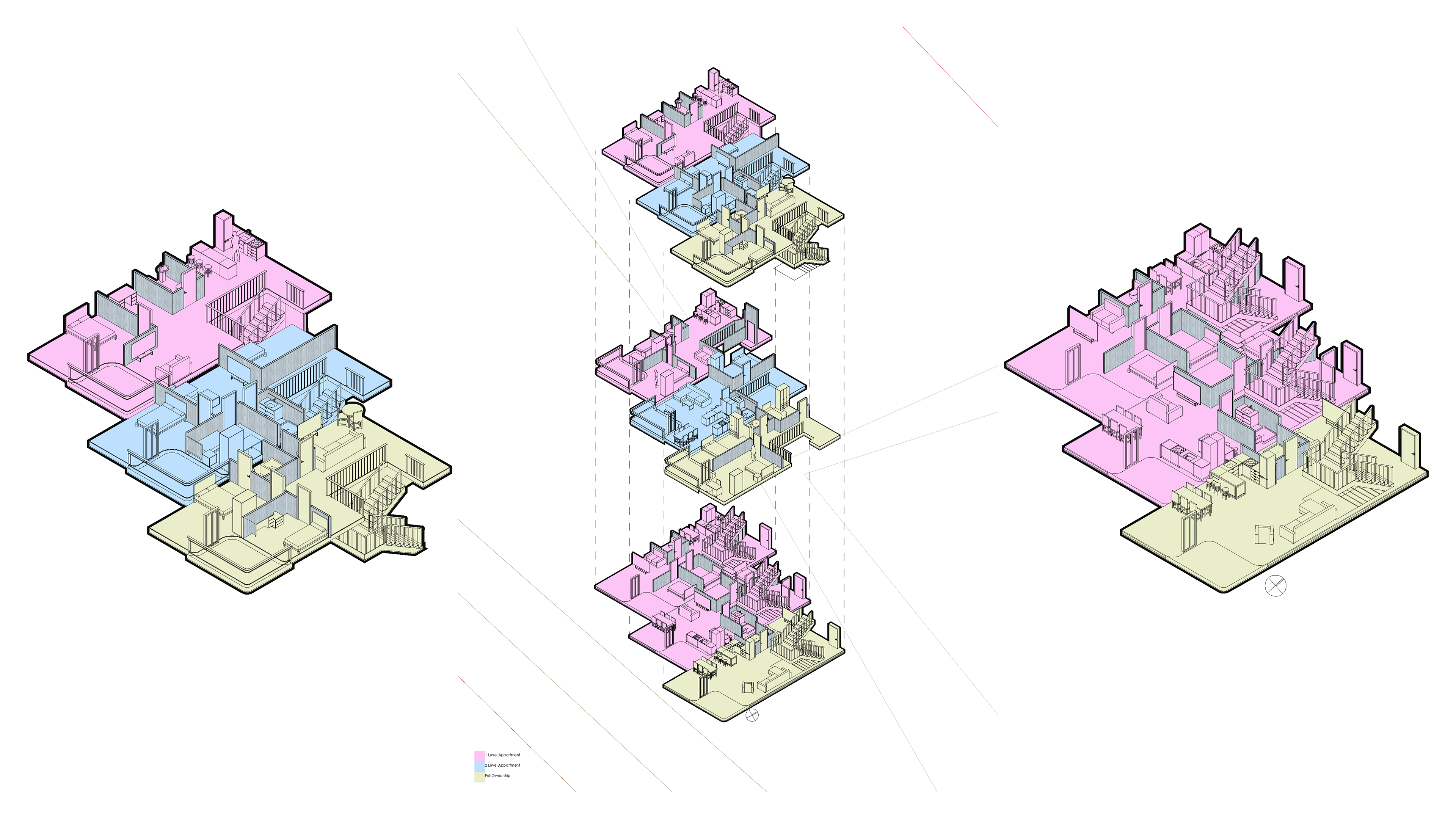
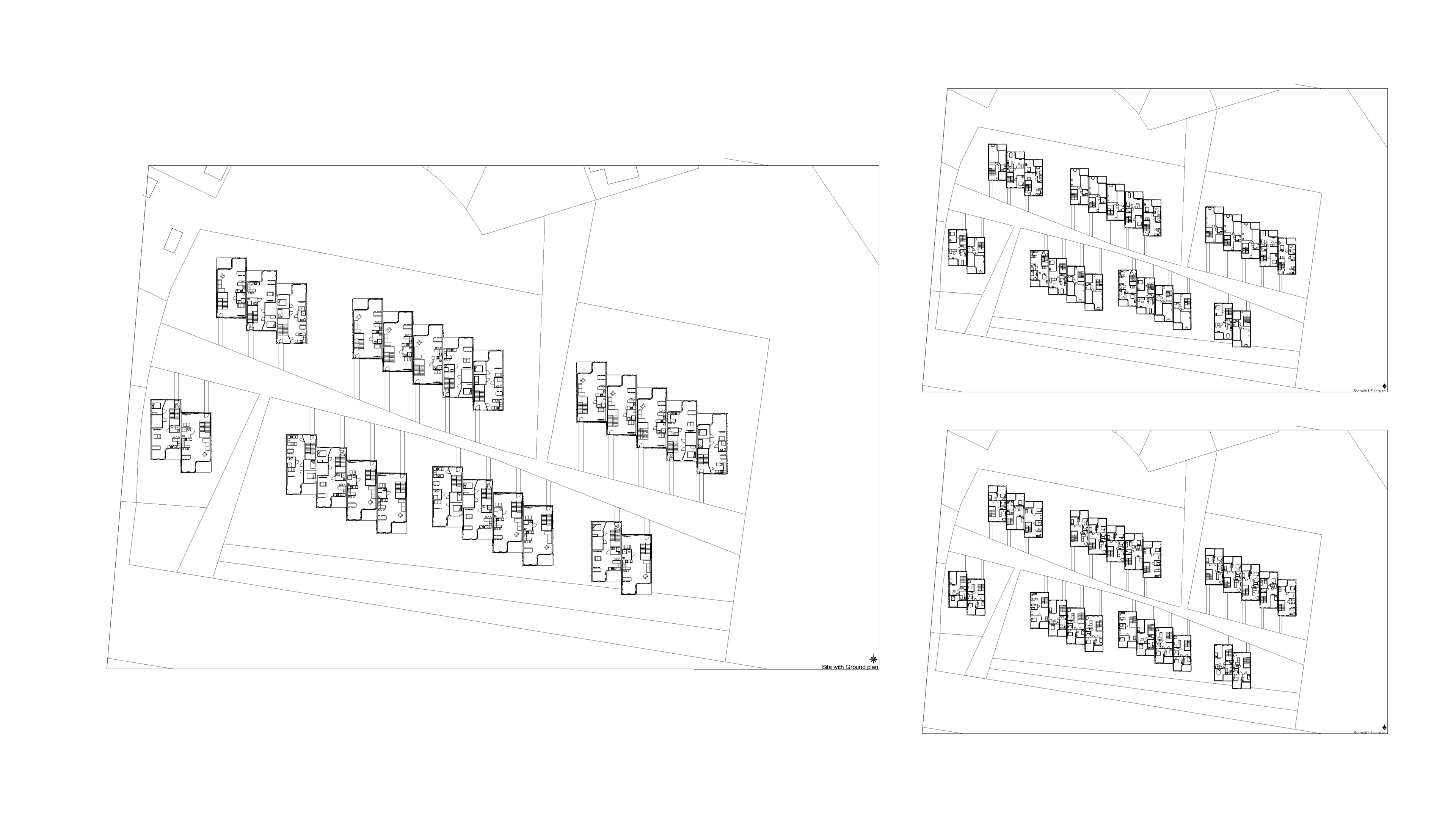
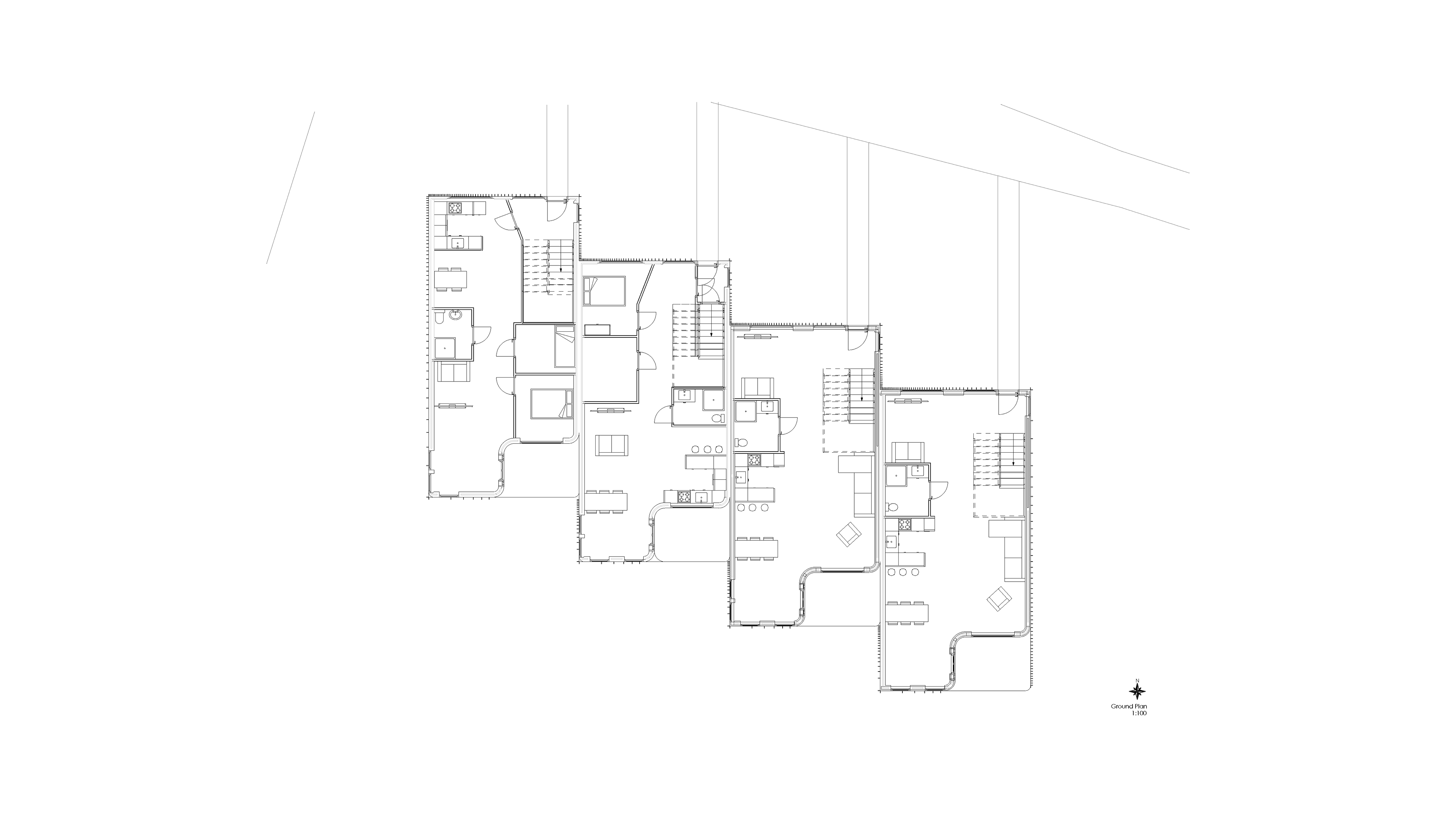
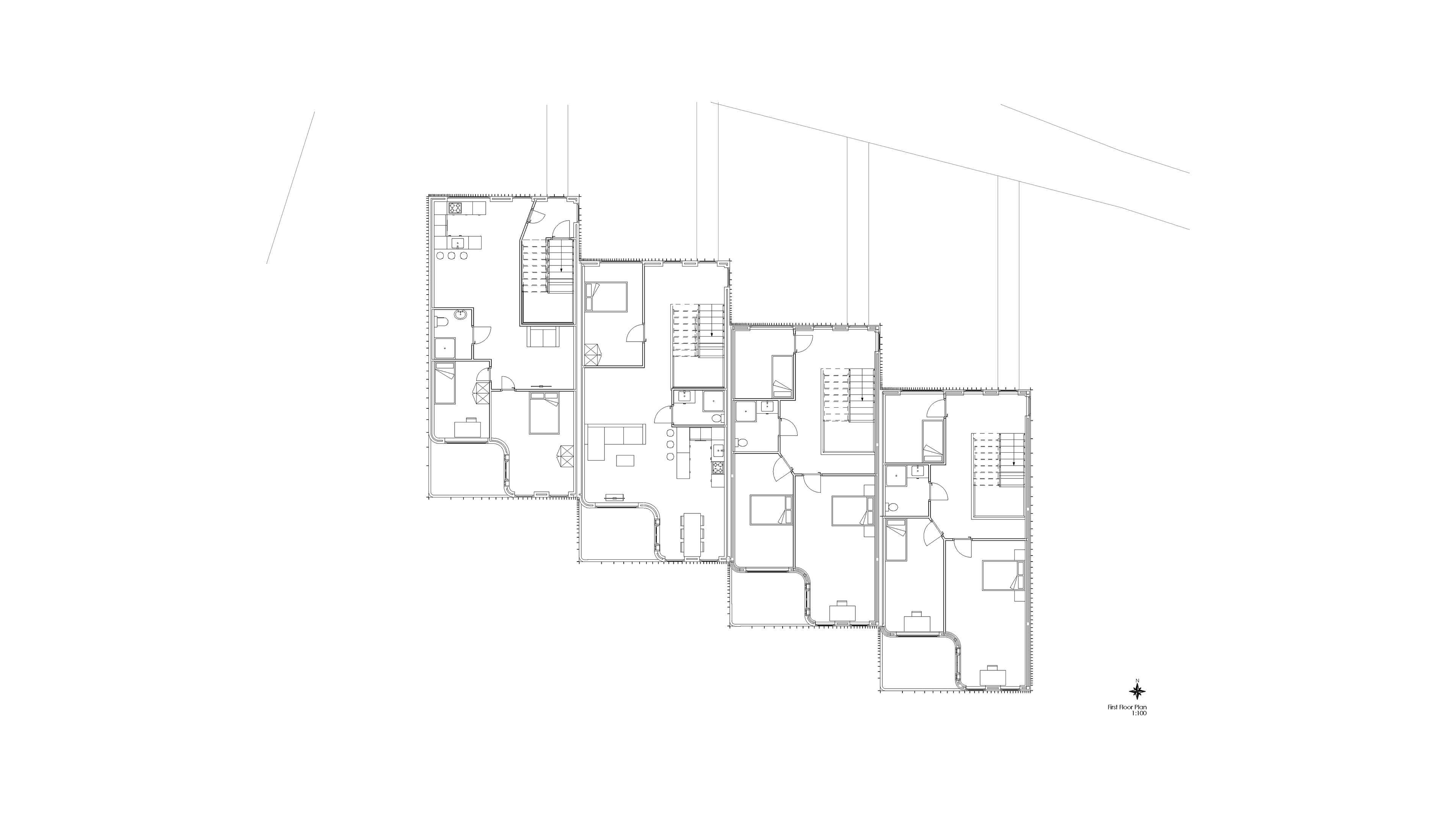
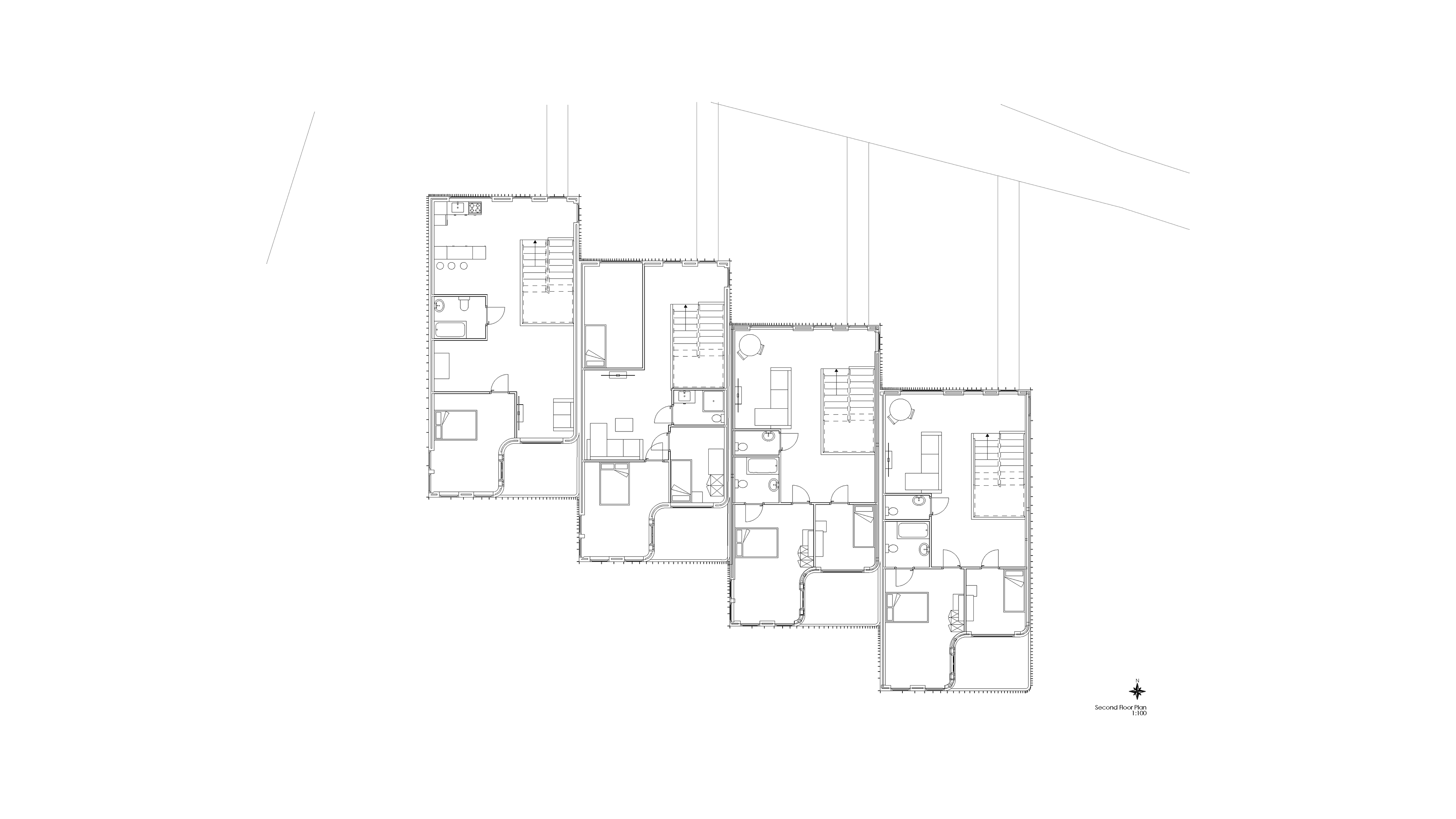
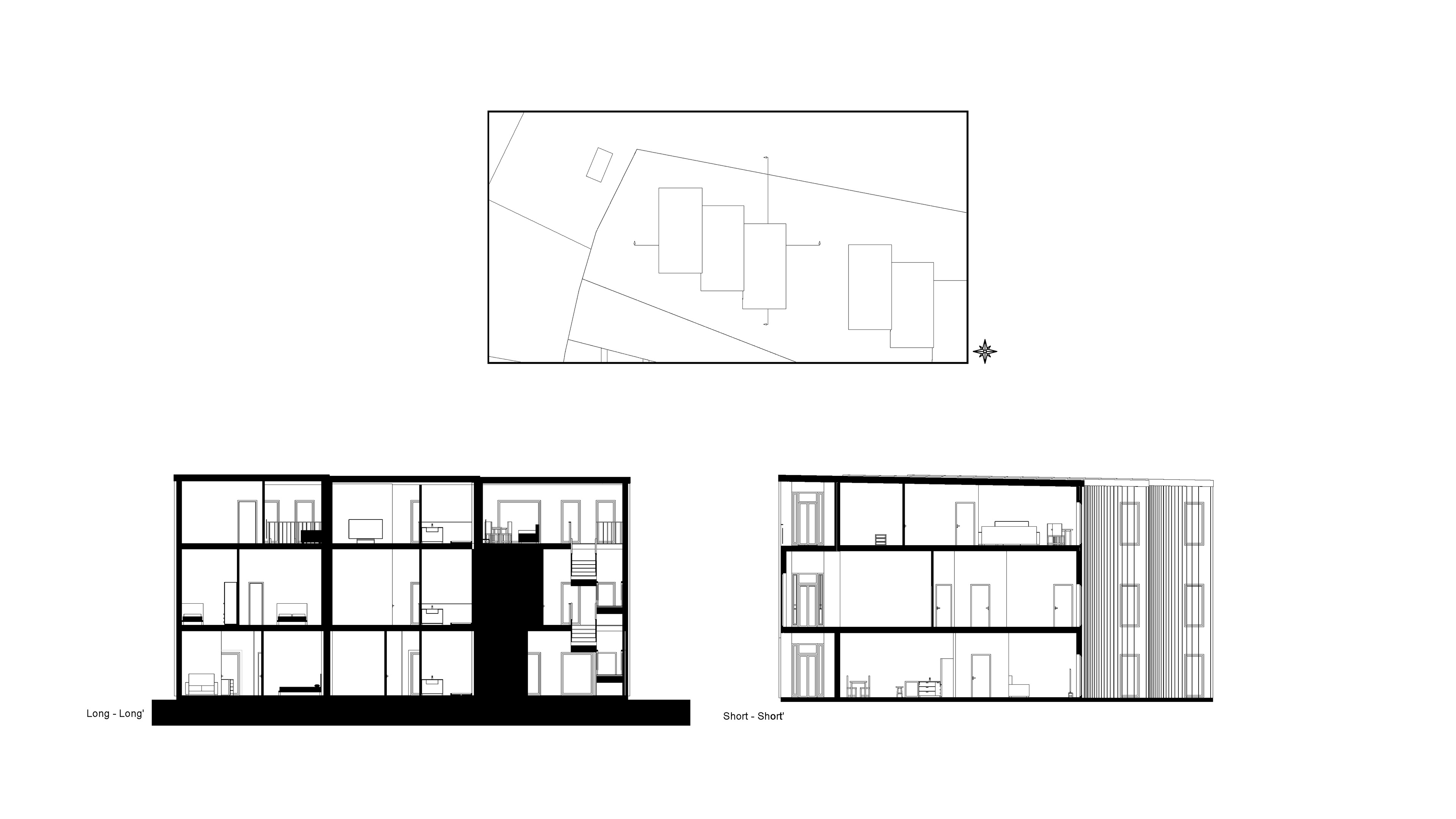
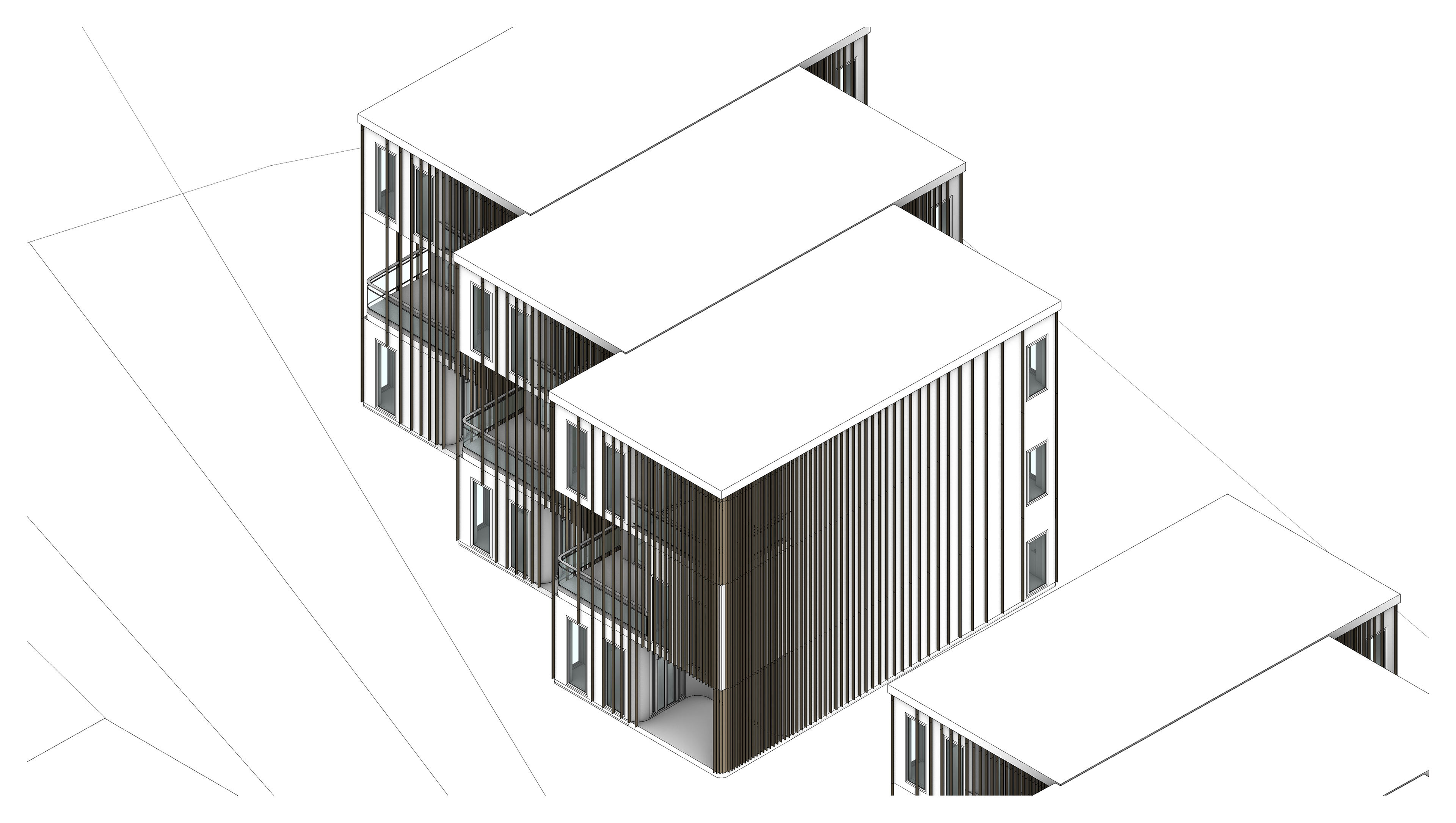
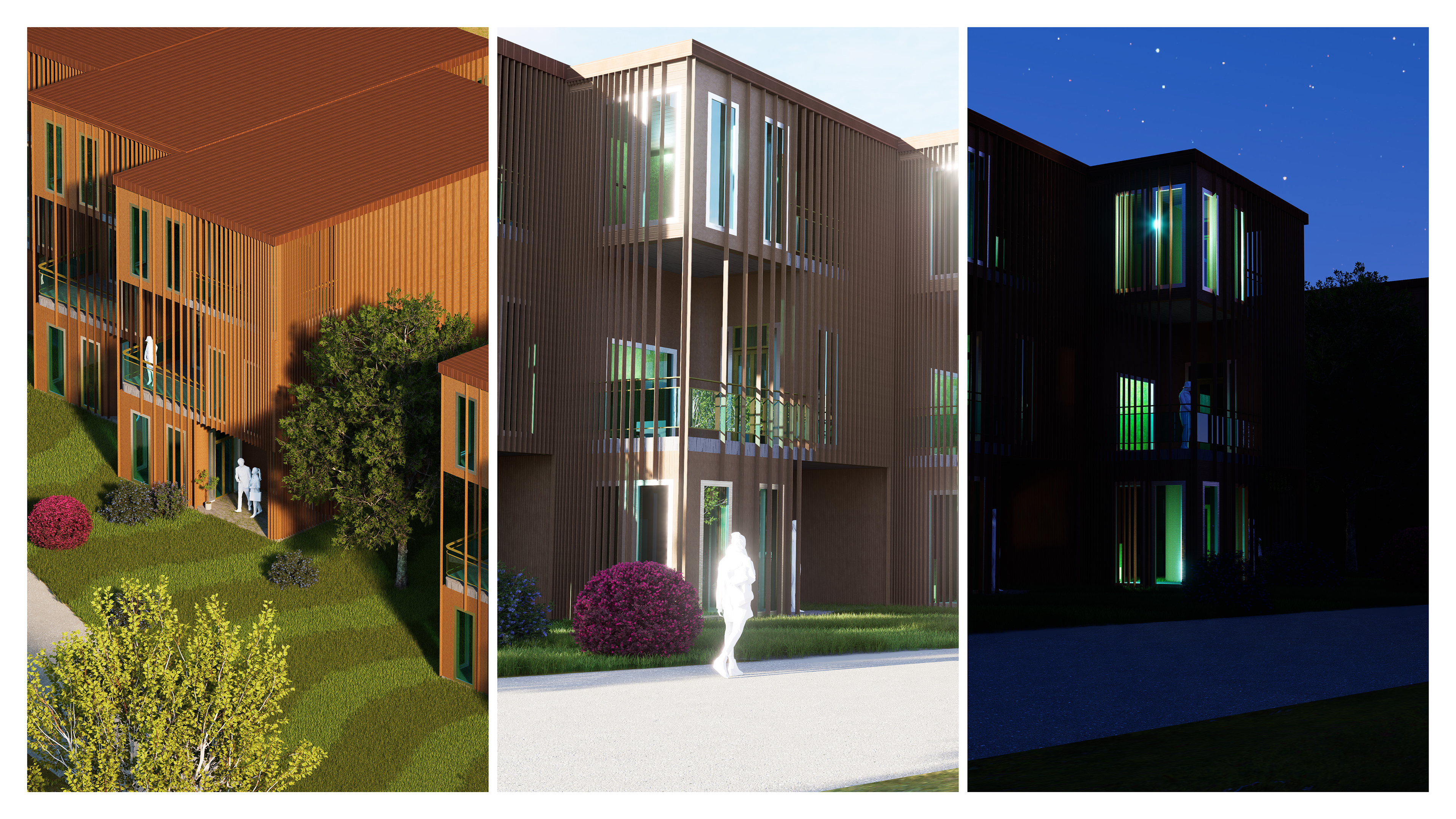
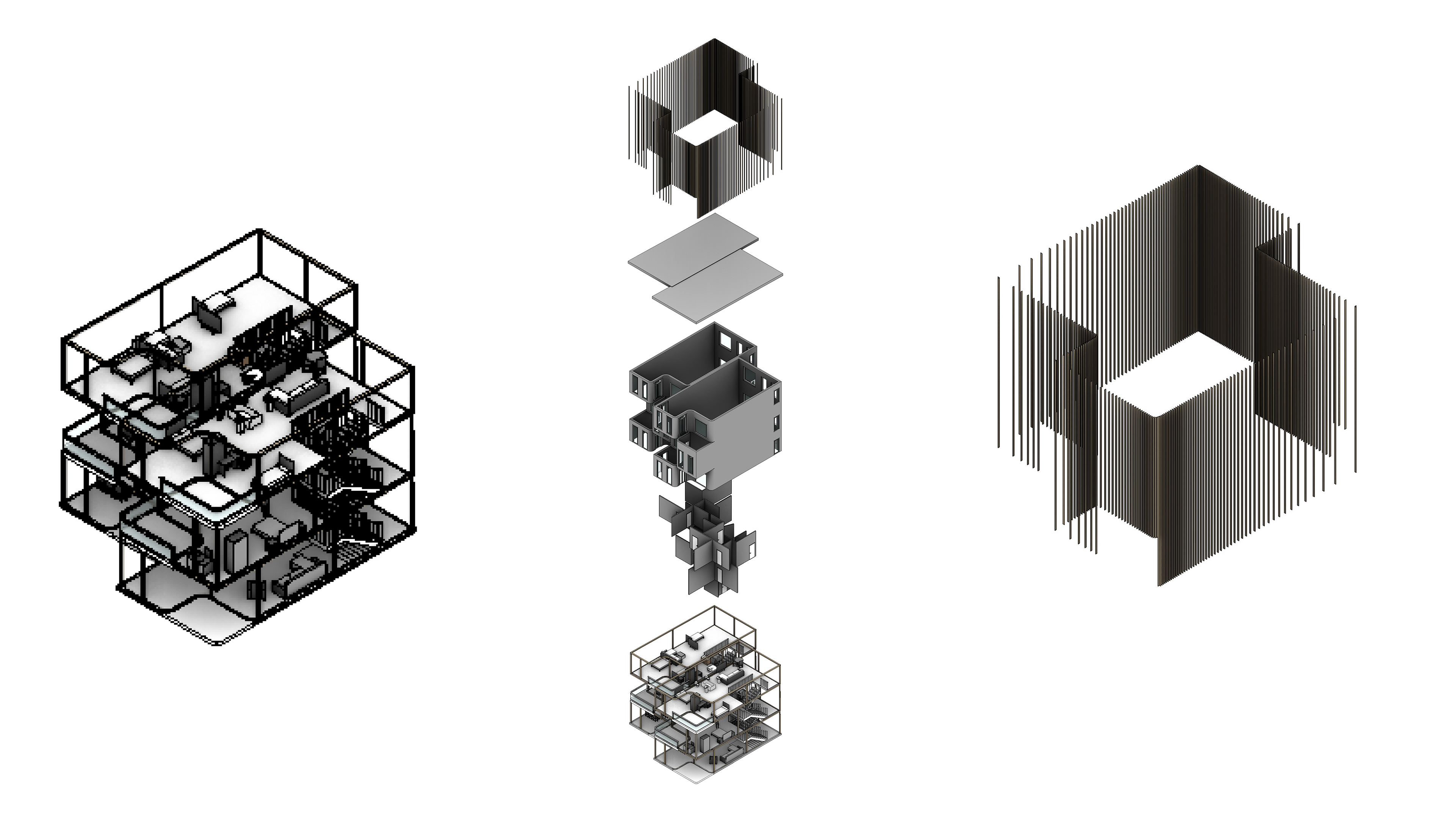
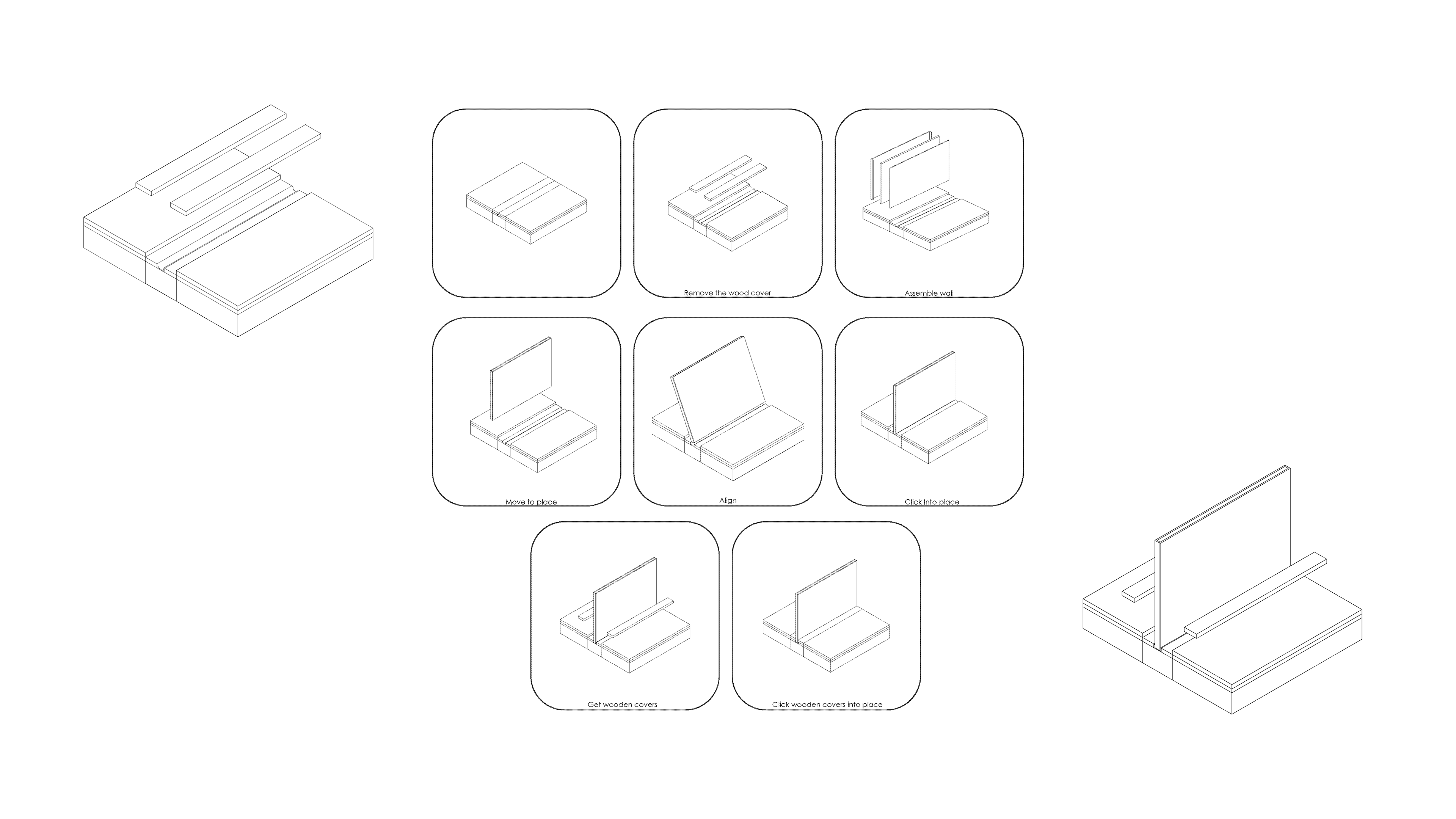
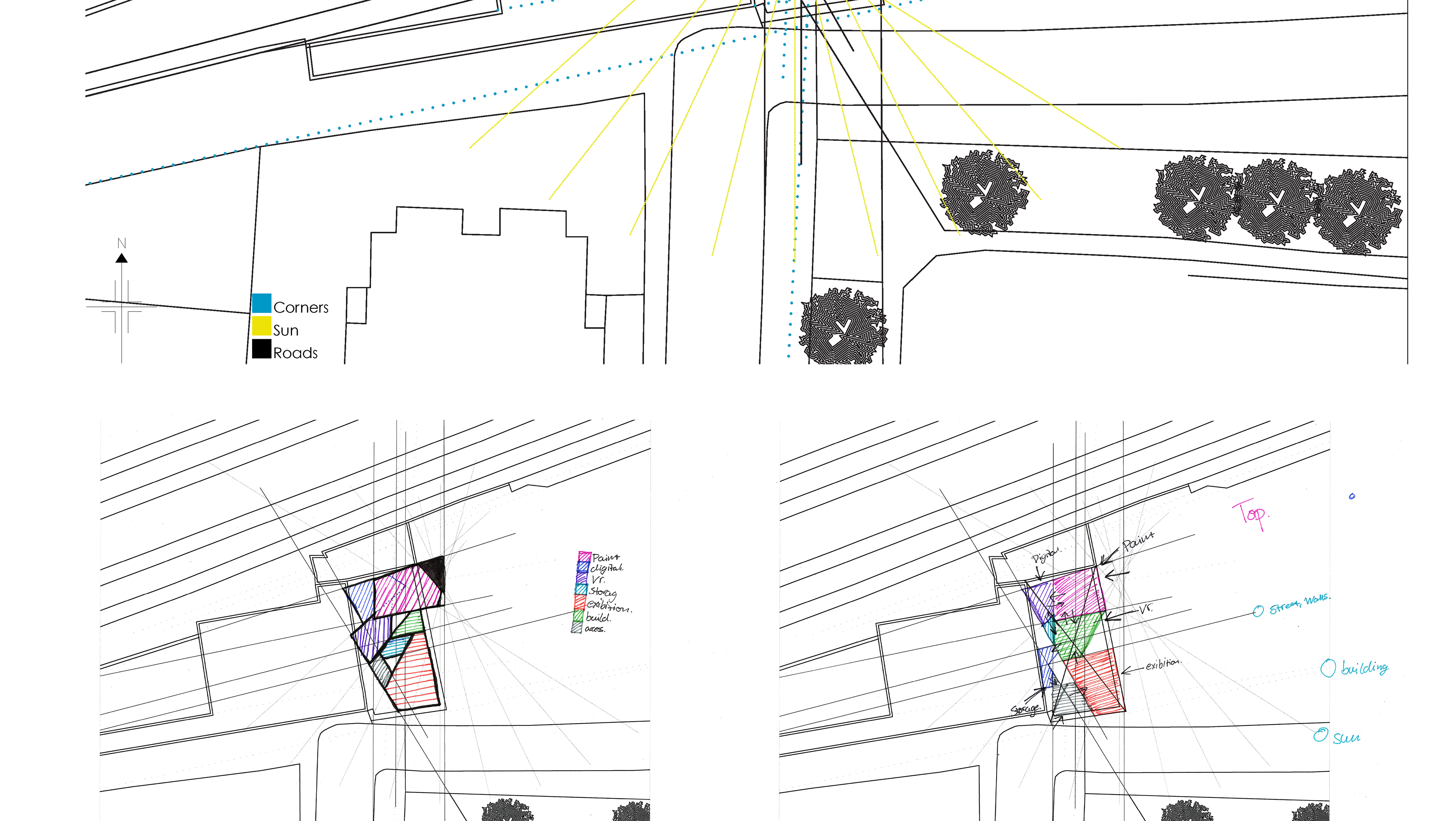
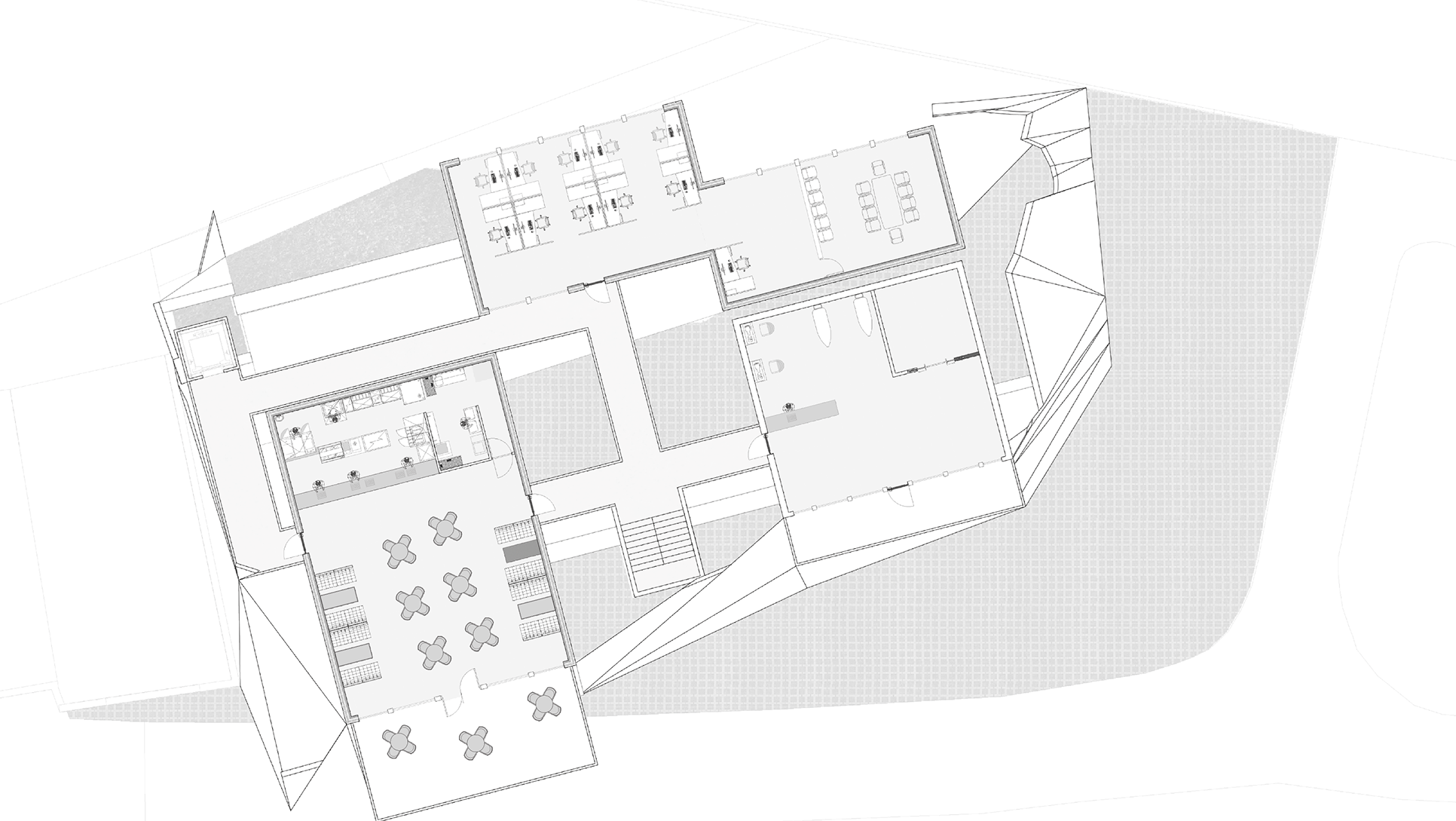
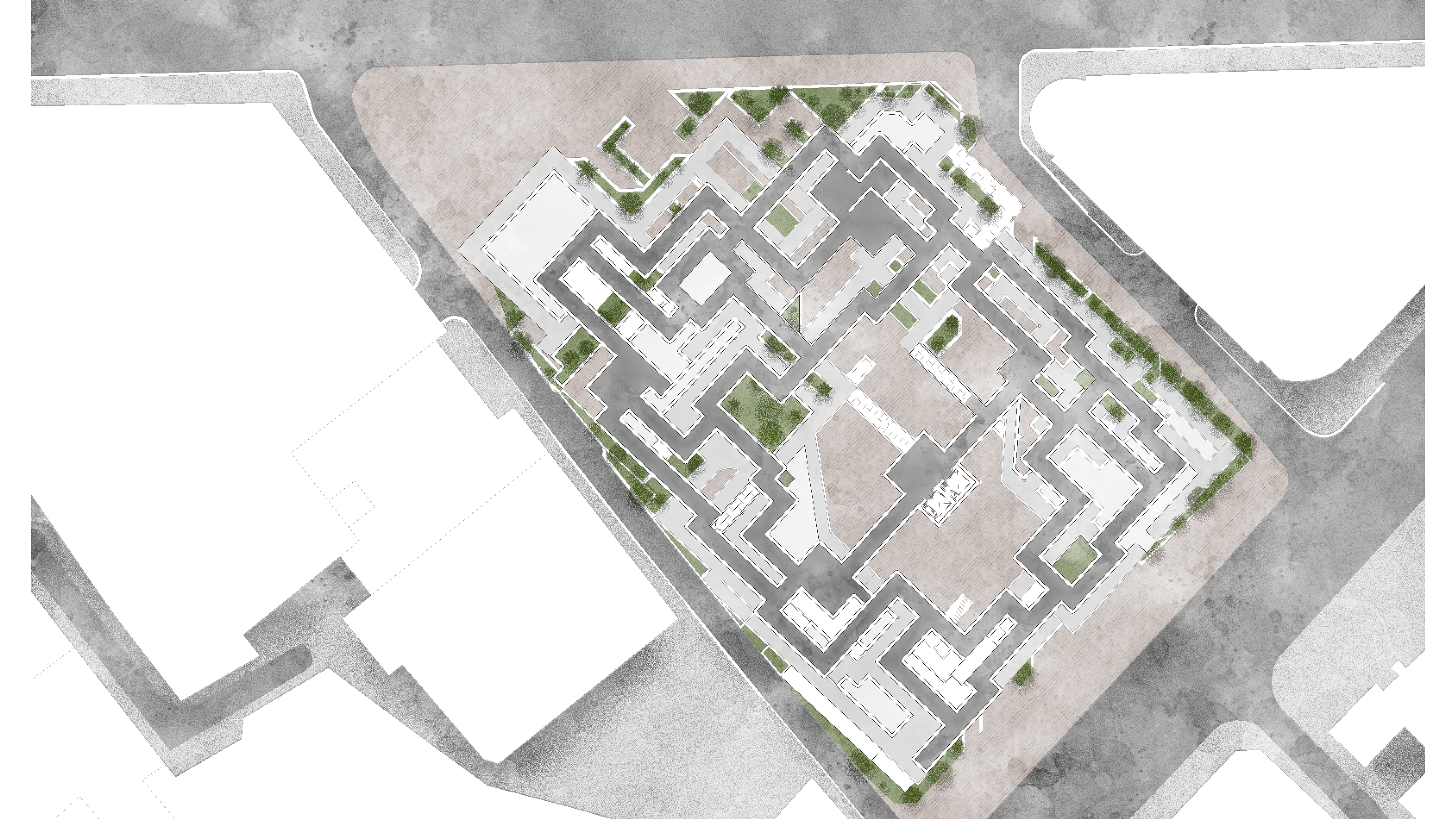
This project explores housing design as a dynamic, adaptable framework rather than a fixed spatial structure. Conventional homes are typically built with predetermined layouts—walls, doors, and circulation routes—which rarely reflect the evolving needs of contemporary life. This rigidity becomes especially problematic during life transitions such as the birth of a child, multigenerational living, or financial constraints that prevent relocation. In response, this proposal investigates a system of adaptable row houses, designed as structural shells, on an unused urban plot in Umeå initially allocated for a kindergarten. These modular shells support flexible interior configurations, allowing residents to define their own room layouts and circulation paths over time. The design approach minimises the need for costly renovations by enabling lightweight, movable partitions—such as fabric or demountable walls—within a fixed load-bearing envelope. This flexibility supports diverse user groups, including growing families, renters, and co-living arrangements. Through site analysis, scenario planning, and spatial programming, the project offers a low-waste, user-driven housing alternative that has the potential to address Sweden's ongoing housing crisis. Rather than forcing people to adapt to architecture, this proposal suggests that architecture should adapt to the people who use it. By doing so, it promotes long-term sustainability, personalisation, and accessibility in housing design, thereby encouraging a more responsive built environment.